Just a few years ago, a certain type of real estate investor was everywhere.
They would brag that they "owned" 200 doors or 400 doors...
They said it at networking events.
They said it in Facebook groups.
They looked down at the guy quietly closing on his first single-family rental and smiled… cute, buddy.
Fast forward to 2026...
That "guy" just got a cash call.
What "Owning" a Syndication Actually Means
Here's what the 400-door investor didn't tell you.
He doesn't own 400 doors. He owns a percentage of a partnership that owns 400 doors. There's a difference — and right now, that difference is costing people everything.
Here's how the math actually worked:
A syndicator raises money from passive investors — sometimes $50,000, $100,000, sometimes more per person. They acquire a large apartment complex. The deal is funded partly by investor equity and partly by a bridge loan — short-term, often floating rate — with the plan to refinance into permanent financing after 2–3 years once the property stabilized.
Then rates went up.
The property didn't hit its projections.
The bridge loan came due.
And the syndicator sent an email nobody wants to receive:
"We are issuing a capital call. To protect the asset and avoid foreclosure, we need each investor to contribute an additional..."
The investor who bragged about 400 doors now has two options:
send more money or lose what they already put in.

Meanwhile, Back in Tunnel Hill, Georgia…
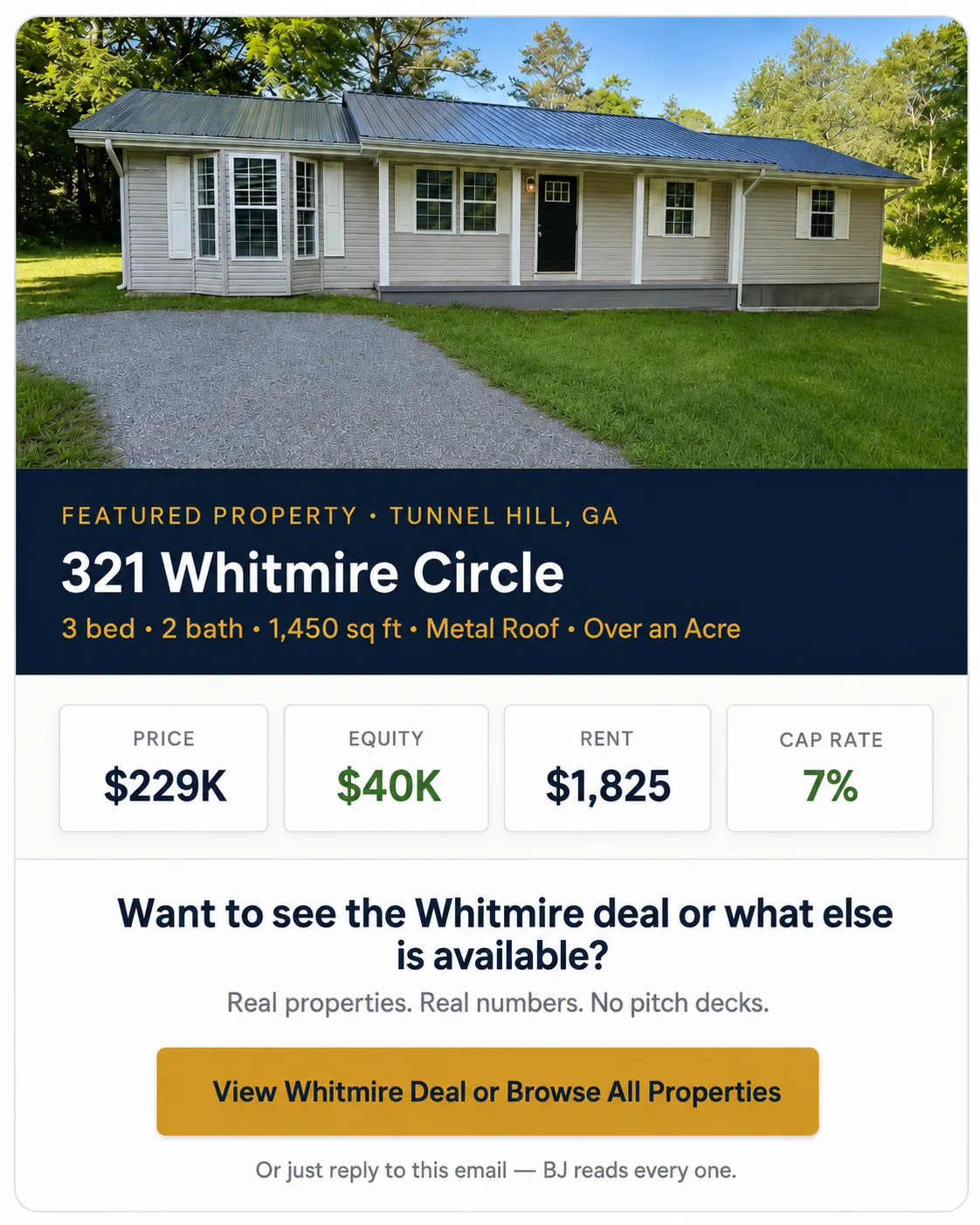
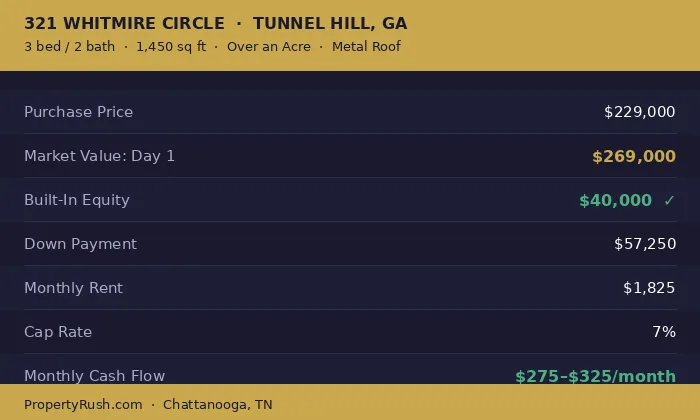
The single-family investor everyone laughed at closed on this:
No partners.
No syndicator.
No loan maturity crisis.
One deed. One tenant. One rent check — every single month.
While the syndication investor is wiring emergency capital to avoid a total loss, this investor is watching $40,000 in built-in equity quietly compound alongside every mortgage payment their tenant is making for them.
Ownership Is Not a Percentage
The word that matters here is OWN.
When you buy a single-family rental the right way, you own it. Your name is on the deed. You decide if you sell, refinance, hold, or 1031 into the next deal.
Nobody can issue you a cash call.
Nobody can vote to sell at the worst possible time.
Nobody is managing your asset with their interests ahead of yours.
A syndication investment is a bet on someone else's execution, someone else's loan terms, and someone else's exit timeline.
A rental property is yours.

Slow, Boring, and Winning
The investors building real wealth right now aren't the ones who figured out how to claim the most doors.
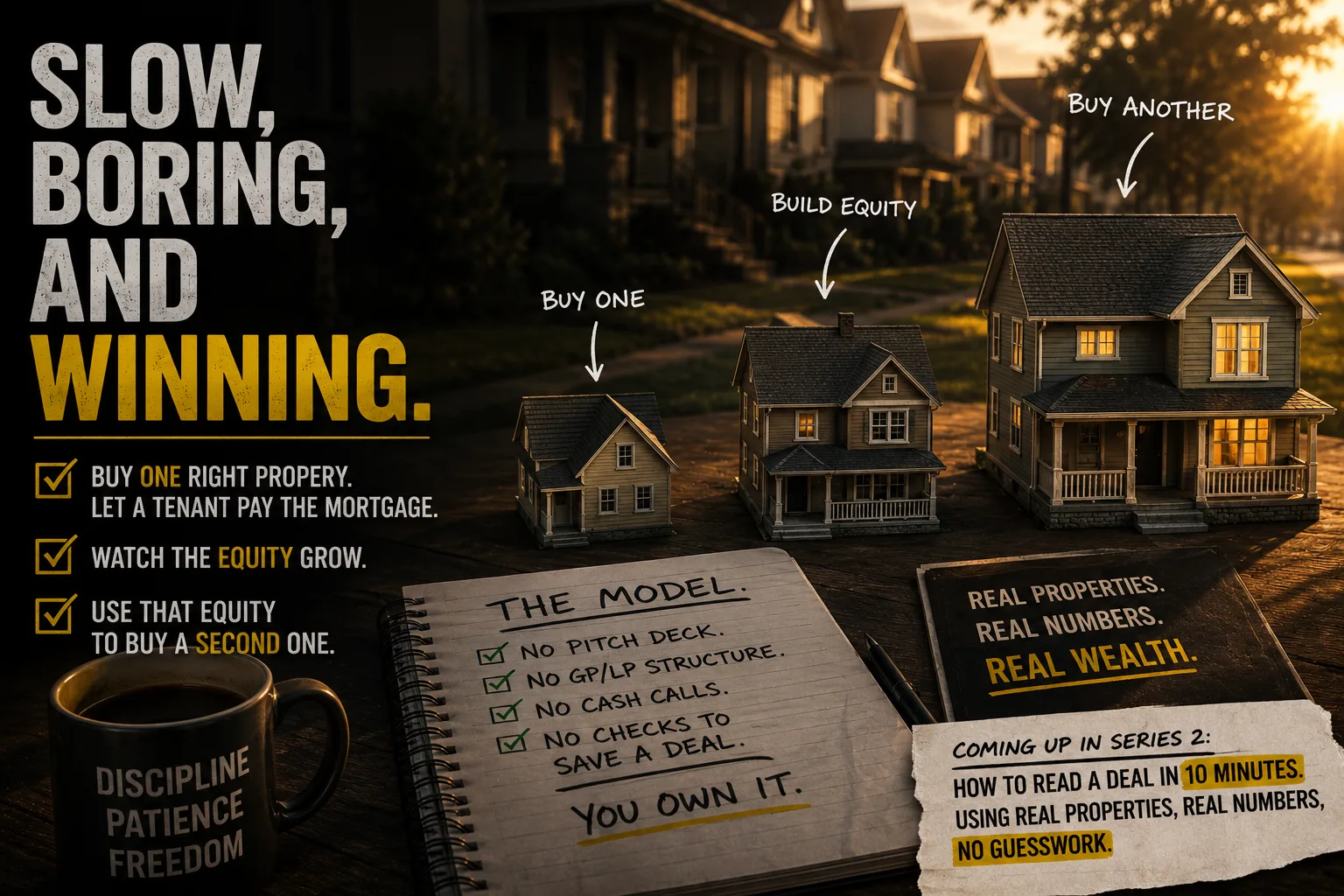
They're the ones who bought one right property, let a tenant pay the mortgage, watched the equity grow, and eventually used that equity to buy a second one — without a pitch deck, without a GP/LP structure, and without ever writing a check to save a deal they didn't control.
That's the model. And this series is going to walk you through it step by step, with real numbers.