
Stop Betting Your 1031 on One Property
Most investors buy one property and call it diversification. That's not how funds think.
Last week I showed you how we score individual properties.
Today I want to show you what happens when we combine high-scoring properties into one portfolio.
Why One Property Isn't Diversification
If you're sitting on 1031 exchange proceeds or 401k funds you want out of the stock market, the usual advice is: buy one rental property.
That's not diversification.
That's one roof, one neighborhood, one tenant, one risk.

How a Blended Portfolio Works
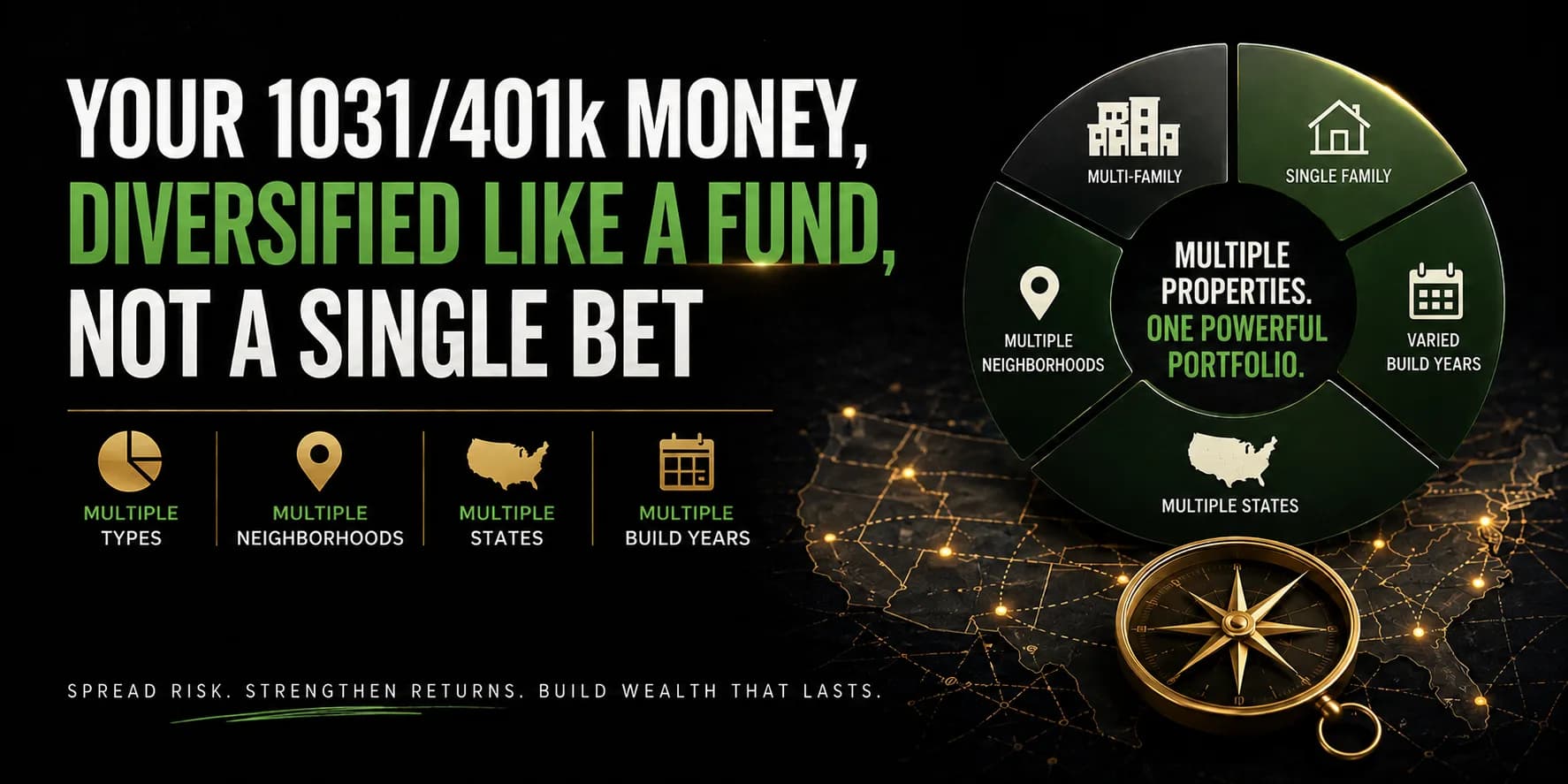
We build blended portfolios instead, spread across property types, neighborhoods, states, and build years — the same logic as a mutual fund, so no single asset carries your return.
A Real Example
Here's a real 5-property blend we underwrote for a 1031 client.
Financed at 25% down, scored on the same system from last week:

The Numbers, All In
A few from our current pipeline that hold up under this test:
- Total cash invested: $370,160 (25% down + closing across all 5)
- Blended ROI (cash flow + paydown + appreciation): 20.5%
- Built-in equity at close: $153,000 (11.6% of purchase price, day one)
That's $2,119/month in cash flow on $370K deployed, plus five doors across two states and two property types instead of one address carrying all the risk.

Ready to Build Your Blend?
Have $250K+ to place? Reply to this email and I'll pull three blended options built around your timeline.
Next week: the number that changes this whole conversation, your true net return once you factor in the tax savings real estate gives you that stocks never will.


More from Investing
All posts →
A Rare New Construction Opportunity in Ringgold, Georgia
New construction. 4 lots remaining. Real numbers inside. Don't wait.

Are You Serious About Building a Real Estate Portfolio?
This is for a very specific type of investor.

Property Rush Portfolio Partners
A more personal and strategic way to build your real estate portfolio.