
Property Management — DIY vs. Hire Out
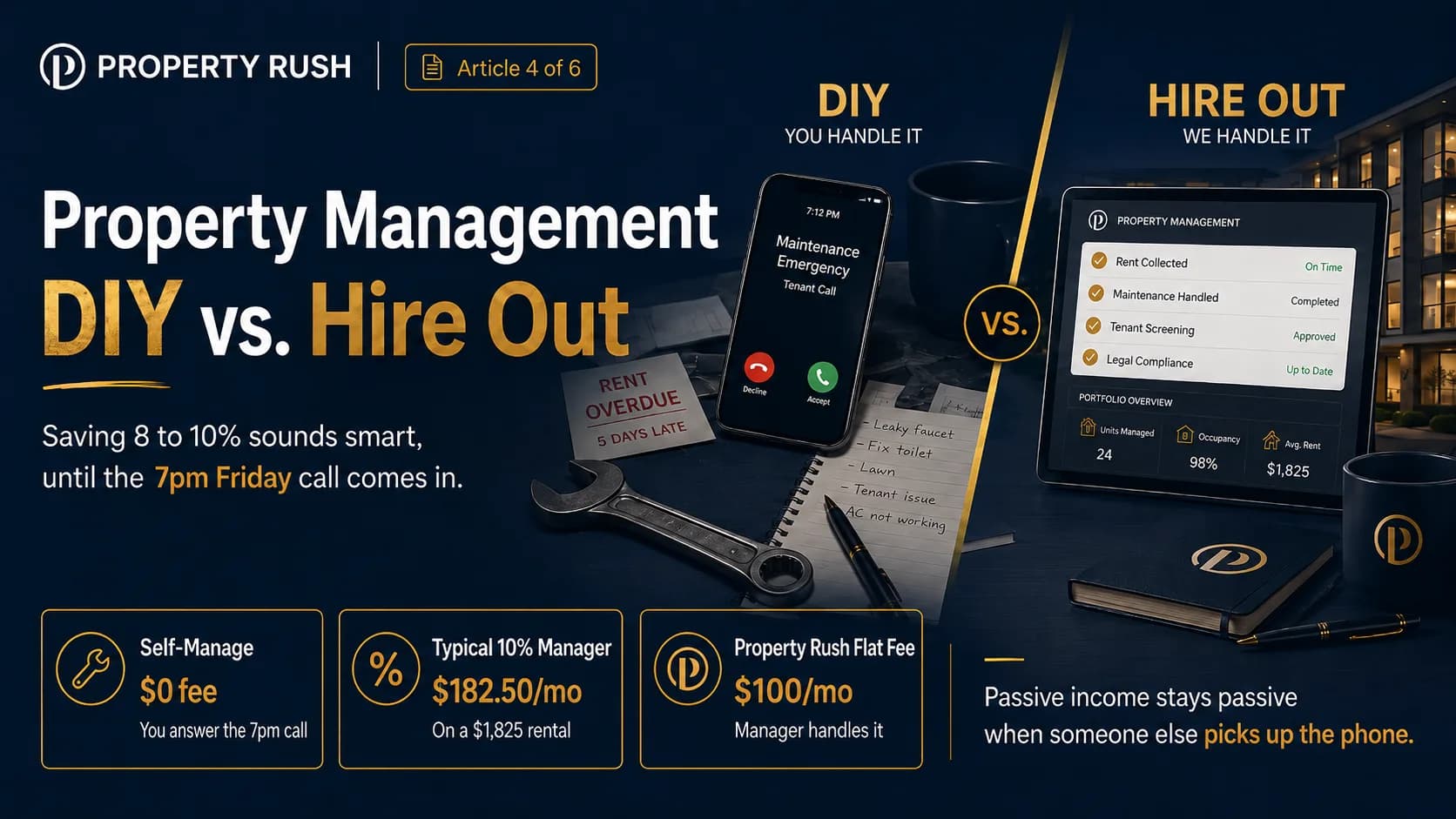
That 10% you're saving? It's yours — until the 7pm Friday call comes in
Here's the thought process of almost every first-time investor:
I'll manage it myself and save the 8-10%.
Makes sense on paper. It's your property, you're local, how hard can it be? Keep that 10% and pocket an extra $182 a month.
Here's what that $182 actually costs you.
What Self-Managing Actually Looks Like
When your tenant's water heater goes out at 7pm on a Friday, and it will, that's your phone ringing. When they're three days late on rent, that's your text conversation. When they move out and you need to coordinate cleaning, repairs, and showing the unit while it's empty, that's your weekend.
None of that is passive. That's a part-time job.
There's also the legal side. Landlord-tenant law varies by state and county. Security deposit rules, required notice periods, habitability standards, eviction procedures — get any of it wrong and you're looking at fines or losing a case you should have won.
Self-management can work.
But it works best when you're local, you're handy, you have the time, and honestly, you enjoy that kind of thing.
Some people do. Most investors don't.
And that's fine because there's a better option.

The Real Math on Hiring It Out
On a $1,825 a month rental, a 10% management fee runs $182.50 a month. That's $2,190 a year.
For $2,190 a year, you get rent collected, maintenance calls handled, lease renewals managed, legal compliance covered, and tenant screening done properly.
What's your time worth per hour? If it's more than about $40, the math already works in favor of hiring it out.
At Property Rush, we manage single-family homes for a flat $100 a month.
Not 10%. Not a percentage that quietly goes up as your rent goes up.
A flat fee.
On a $1,825 rent, that's about 5.5% and it doesn't change if your property rents for $2,200 next year.

When DIY Actually Makes Sense
There are situations where managing yourself is the right call, at least temporarily.
If you're buying your first property, it's local, and you genuinely want to understand the landlord side of the business, managing it yourself for the first year teaches you a lot. You'll know what to look for in a manager later and you'll have a real sense of what the job involves.
But the minute you have two or three properties or a job that already fills your calendar — hire it out.
Passive income only stays passive when someone else is answering that Friday night call.


More from Property Management
All posts →
Leveraging Legal Advantages: Why Property Management Companies are Essential
Managing rental properties can be a lucrative venture, but it also comes with its fair share of challenges and legal responsibilities. From tenant disputes to property maintenance, landlords navigate a complex landscape of laws and regulations that govern rental properties. In
10 Tips to Help You Successfully Work With Your Property Manager, and Why You Need One.
Working with a Property Manager is crucial for ensuring the smooth operation and maintenance of your rental properties. Here are 10 tips to help you successfully work with your property manager, along with reasons why you need one: Why you need a property manager: Overall, a
How Property Management Will Help Limit Your Rental Property Liabilities
As a landlord or property owner, it’s essential to be aware of the various liabilities that come with renting out a property. From property damage to tenant injuries, there are many risks associated with owning a rental property. However, with the help of property management,